
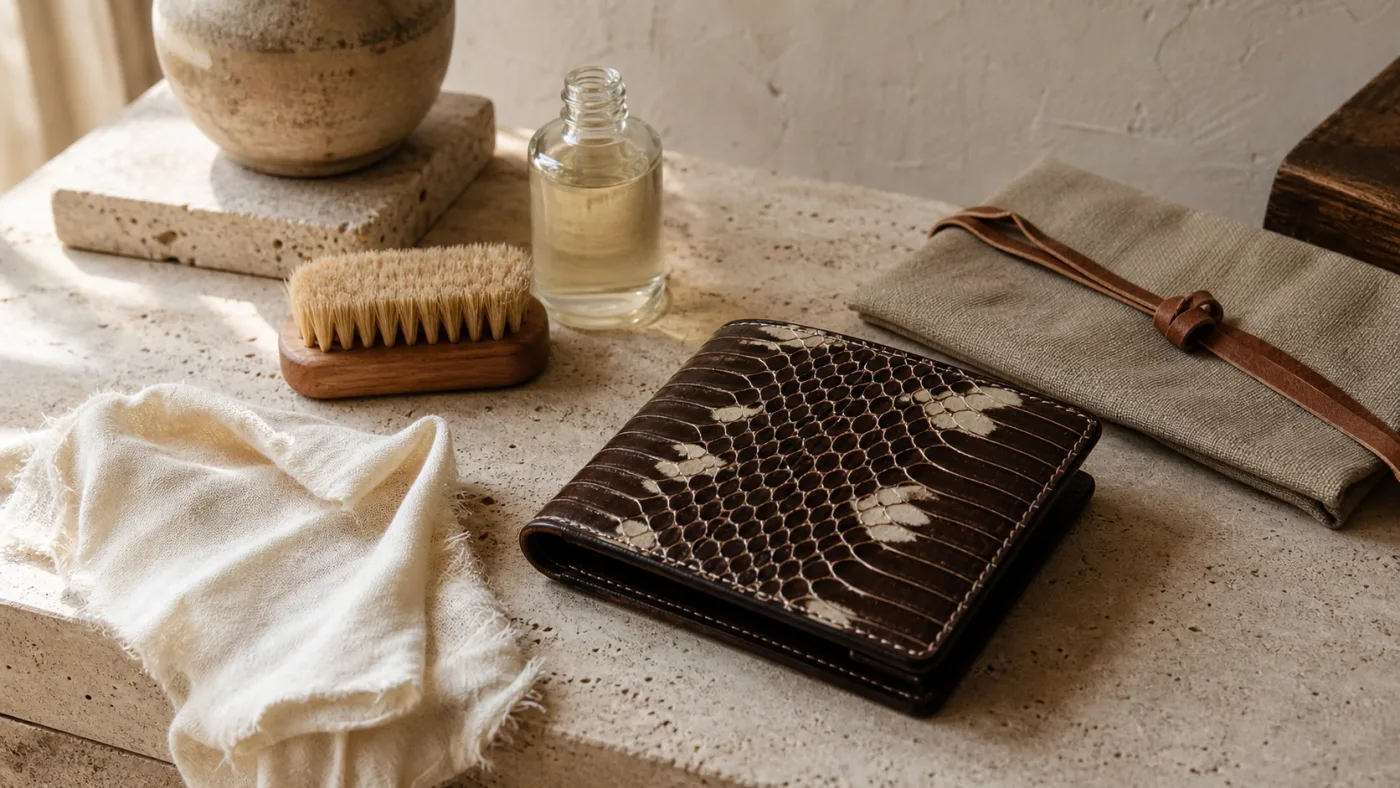
Exotic leather is not difficult to care for, but it does ask for a little attention. Cobra, python, crocodile, and other natural leathers carry texture that should be protected rather than over-treated. The best care routine is quiet: keep the piece clean, dry, and stored with enough breathing room.
For Attic Wild Side collectors, care matters because the material is part of the object’s story. A wallet or belt should not look frozen in time. It should age slowly, with the natural surface staying clear, tactile, and personal.
Start with the climate around the piece
The right care routine depends partly on where the piece lives. Humid climates can introduce moisture, while very dry rooms can make natural leather feel thirsty. Neither condition needs panic. The goal is balance.
If you live in a humid place, avoid sealed plastic storage and give the piece air. If you live in a dry climate, avoid leaving it near heaters, direct sun, or air-conditioning vents for long periods. Extreme environments do more harm than normal use.
For humid climates: let the leather breathe
Humidity is common across tropical regions and coastal cities. Exotic leather can handle ordinary daily conditions, but it should not be stored damp or trapped without airflow.
- Store the piece in a breathable cloth pouch rather than a plastic bag.
- Keep it away from bathrooms, wet floors, and closed drawers with poor airflow.
- After rain or travel, wipe gently with a soft dry cloth and let it rest at room temperature.
- Never use direct heat to dry natural leather.
If the surface feels slightly damp, do not rub aggressively. Pat gently, then let the piece dry slowly. Patience protects the finish better than force.
For dry climates: avoid heat and over-conditioning
Dry air can make leather feel stiffer over time, especially if the piece is stored near heat. The answer is not to apply heavy conditioner often. Exotic leather usually needs restraint.
- Keep the piece away from prolonged sunlight and heaters.
- Use a soft cloth for routine dusting.
- Condition only when needed and only with a product suitable for exotic leather.
- Test any conditioner on a discreet area first.
Too much conditioner can darken the surface, soften structure, or leave residue in the texture. If you are unsure, ask the studio before applying any product.
Good care should preserve the leather’s character, not cover it.
Cleaning cobra, python, and crocodile surfaces
Each exotic leather surface has its own rhythm. Cobra and python can have more pronounced scale direction, so wipe gently with the grain rather than against it. Crocodile has a more structured surface and should be cleaned with light pressure around the grain.
For routine cleaning, use a clean, dry, soft cloth. Avoid household cleaners, alcohol, detergent, perfume, and oils. These products can stain or damage the finish.
If you are comparing materials before purchasing, our exotic leather wallets guide explains the difference between cobra, python, and crocodile texture.
How to store a wallet, belt, or small accessory
Storage is where many pieces age well—or age badly. A wallet carried every day can develop character naturally. A wallet stored badly can lose shape or pick up moisture marks.
- Empty wallets before long storage so the shape is not stretched.
- Roll belts loosely rather than folding them sharply.
- Keep jewelry and sharp objects away from leather surfaces.
- Use breathable fabric storage when the piece is not in regular use.
For gift buyers, this is also useful information to share with the recipient. A rare material feels more meaningful when the owner knows how to care for it.
What to do if the piece gets wet
If an exotic leather piece gets wet, do three things: remove excess moisture, keep the shape natural, and let it dry slowly. Do not use a hair dryer, heater, iron, or direct sun.
Place the piece on a clean dry cloth in a room with normal airflow. If it is a wallet, avoid stuffing it with paper that may transfer ink or change the shape. Once dry, inspect the surface before using any care product.
When to ask before treating the leather
Ask for guidance if the piece has deep staining, unusual stiffness, a strong odor, salt marks, or damage around stitching and edges. It is better to ask before applying a product that cannot be undone.
You can contact our studio with a photo and your climate or storage question. We can help you decide whether the piece needs simple cleaning, rest, or more careful treatment.
Care is part of responsible ownership
Natural materials deserve care because they are not generic. Attic Wild Side pieces are chosen for texture, origin, and hand-finished character. Care keeps those qualities visible.
For applicable regulated materials, responsible ownership also includes understanding sourcing and documentation. Read our CITES and sourcing page for the broader context, or review shipping and duties before ordering internationally.
Handled thoughtfully, an exotic leather wallet or accessory can become more personal over time. It carries the marks of use without losing the surface story that made it special in the first place.