
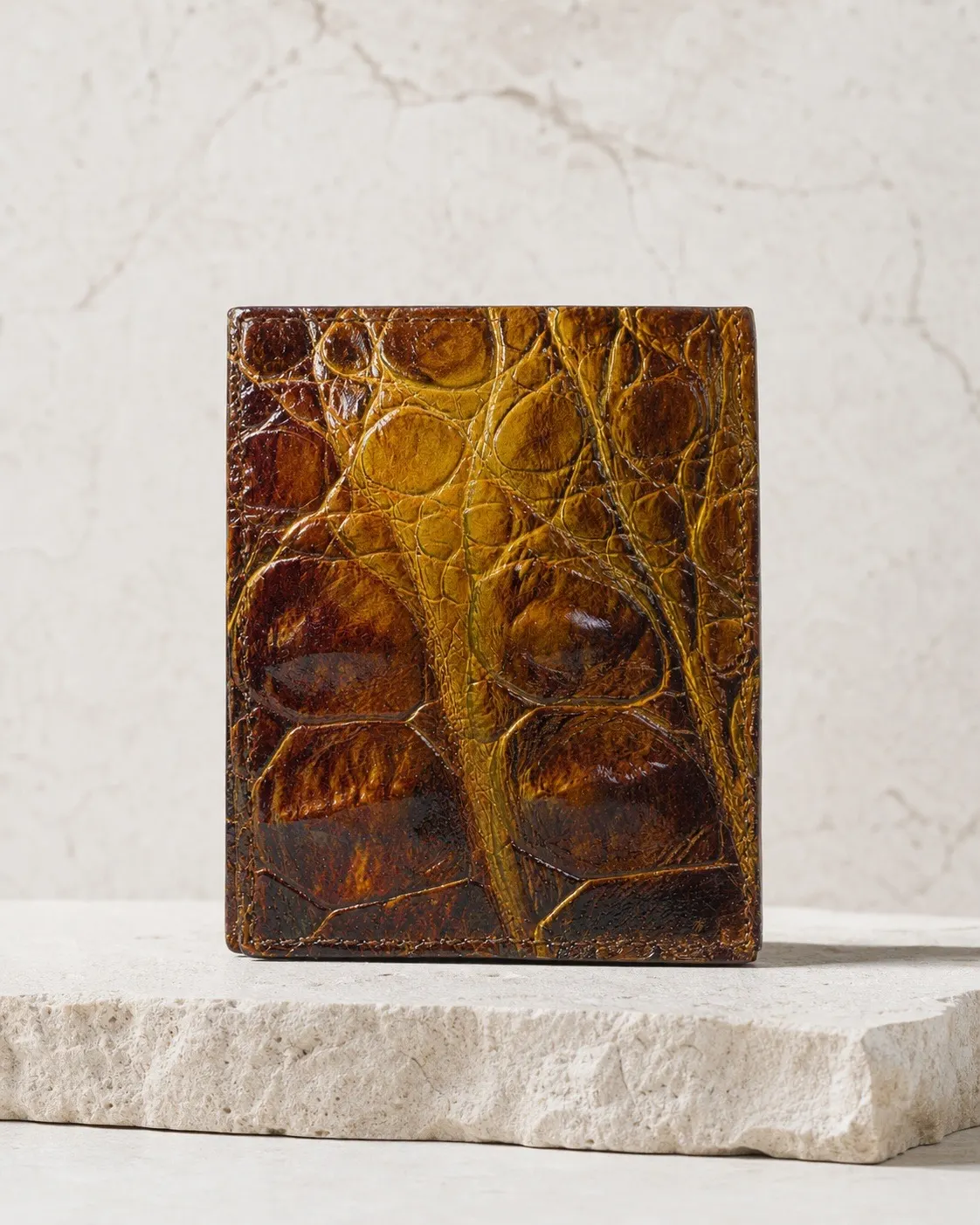
Natural leather does not ask for constant attention. It asks for the right kind of attention.
A handcrafted python, cobra, or crocodile leather piece carries a surface that was shaped by nature before it was cut, stitched, and finished by an artisan. Its scales, grain, tone, and small irregularities are part of the object—not details that need to be polished away.
Good care is therefore less about making exotic leather look permanently new and more about helping it age with character. A few quiet habits are usually more valuable than an elaborate cabinet of products.
Begin with how you use it
The everyday life of a wallet or belt matters more than occasional deep cleaning. Avoid overfilling a wallet, sharply folding a belt in the same place, or leaving a leather piece pressed beneath heavy objects. Repeated strain can change the shape of the leather and place unnecessary pressure on stitching and edges.
When carrying a wallet, give cards and notes enough room to sit naturally. If the piece becomes wet, remove its contents and allow it to return to shape without forcing or stretching it.
Care begins with restraint: less pressure, less moisture, and fewer unnecessary products.
Keep water, heat, and prolonged sunlight at a distance
Exotic leather should be kept away from prolonged moisture. If a few drops reach the surface, gently blot them with a clean, soft, absorbent cloth. Do not rub aggressively, as friction can disturb the finish or catch the edges of raised scales.
Let the piece dry naturally at room temperature. Hair dryers, heaters, and direct afternoon sun may dry the surface too quickly. The same principle applies to storage: avoid hot cars, damp drawers, and windowsills exposed to strong sunlight for long periods.
Clean softly—and follow the direction of the scales
For routine cleaning, begin with a dry, lint-free cloth. On python and cobra leather, move gently in the natural direction of the scales rather than brushing against them. This reduces the chance of lifting or catching their edges.
For crocodile leather, use light movements across the grain and around the raised pattern. Pay particular attention to seams, folds, and hardware, where dust can collect.
Avoid household cleaners, alcohol, wet wipes, perfume, and products intended for floors, furniture, or synthetic materials. A product that appears harmless on one finish may darken, dry, or alter another. When in doubt, stop at a soft dry cloth and ask the maker for guidance.
Condition only when the leather asks for it
Conditioner is not an everyday requirement. Applying too much can change the color, soften the structure, or leave residue between scales. If the surface begins to feel unusually dry, choose a conditioner specifically described as suitable for the relevant exotic leather and finish.
Test a very small amount on an inconspicuous area first. Allow the test area to settle before treating a larger surface. Apply sparingly with a soft cloth, following the natural grain or scale direction, and never saturate the leather.
Because finishes vary between products, there is no universal schedule. Climate, frequency of use, storage, and the individual material all influence when—if ever—conditioning is needed.
Store it with room to breathe
Before storing a piece, make sure it is clean and completely dry. Keep it in a breathable cotton pouch or wrap it loosely in acid-free tissue. Avoid sealed plastic for long-term storage, especially in humid environments.
Wallets can be stored empty or lightly supported so they retain their shape. Belts should be hung from the buckle or rolled loosely without a hard crease. Keep metal hardware from pressing into the leather surface, and do not stack heavy objects on top.
A cool, dry place with moderate airflow is usually preferable to a display area exposed to heat or sunlight.
Accept the patina, notice the warning signs
Natural materials change through use. A slightly deeper tone, a softer hand, or subtle variation around the points most often touched can become part of the piece’s story. These changes are different from damage caused by persistent dampness, severe dryness, lifting scales, loose stitching, or a change in odor.
If you notice those warning signs, pause home treatment. Share clear photographs with a leather specialist or with our studio before applying additional products. Early, careful advice is usually better than trying several remedies in succession.
A simple care rhythm
- After regular use, remove dust with a soft, dry cloth.
- Keep the piece away from prolonged water, heat, and direct sunlight.
- Do not overfill, crush, or sharply fold the leather.
- Store it clean and dry in a breathable covering.
- Use specialist conditioner only when needed and test it first.
- Ask for advice before treating stains, lifted scales, or damaged stitching.
Made by hand, cared for with intention
The most satisfying natural-material objects are not frozen in time. They become familiar through touch while preserving the pattern and workmanship that made them distinctive in the first place.
Explore the complete Attic Wild Side collection, or contact our studio if you would like care guidance for a specific piece or material.